The Triangular Zipper: How MIT’s 3D-Printed Innovation Makes Shape-Shifting Structures Possible
Imagine a floppy tentacle that can instantly become a rigid beam—or a lightweight structure that folds flat and then locks into a stable framework. That’s exactly what researchers at MIT have achieved by reviving a four-decade-old idea: the triangular zipper. Using modern 3D printing, they’ve turned this concept into a working device called the Y-Zipper. Below, we explore what this breakthrough means for robotics, deployable structures, and more.
What Exactly Is the Y-Zipper?
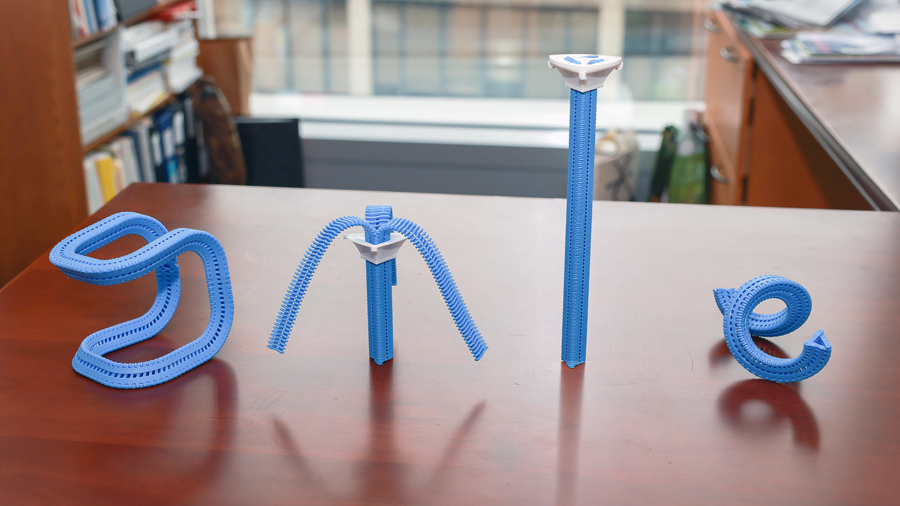
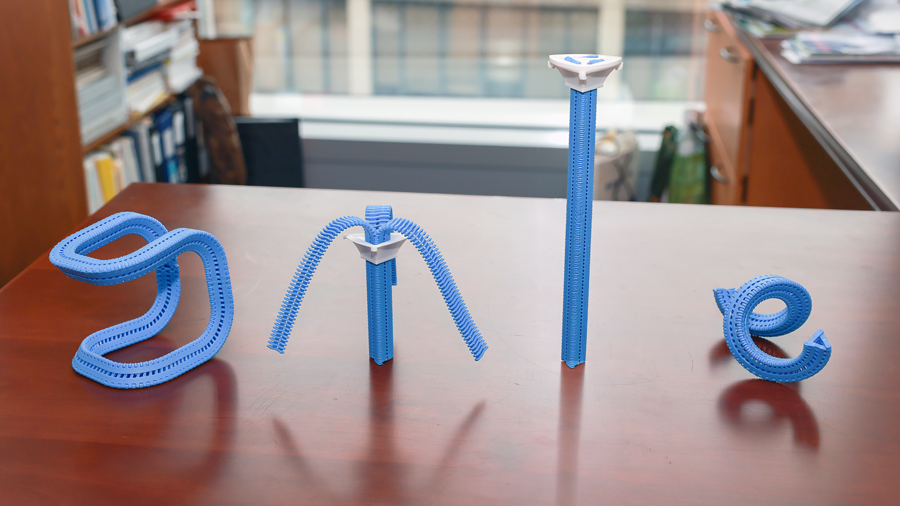
The Y-Zipper is a three-sided zipper—shaped like the letter Y—that can transform flexible, limp structures into rigid beams or robotic limbs in seconds. Unlike a traditional zipper that joins two fabric edges, this one interlocks three strips of material with triangular teeth. When zipped, the three strips form a stiff, triangular cross-section; when unzipped, they become soft and bendable again. This was originally proposed in the 1980s but couldn’t be manufactured accurately until 3D printing allowed precise fabrication of the complex tooth geometry.
How Does the Y-Zipper Work?
The mechanism relies on interlocking triangular teeth arranged along three separate strips. Each strip has a row of teeth that mate with the adjacent strips when zipped together. The resulting triangular shape distributes forces evenly, turning the assembly into a strong, beam-like structure. When the zipper is pulled apart, the strips separate and become floppy again. This transition happens almost instantly—within seconds—thanks to the smooth sliding action of the zipper. The key advantage is that the same material can switch between flexible and rigid states without any external power source or complex actuators.
What Materials Are Used in the Y-Zipper?
MIT’s prototype was entirely 3D-printed using standard thermoplastic filaments (like PLA or nylon), which are common in desktop printers. The researchers optimized the tooth shape and tooth pitch to ensure reliable interlocking and smooth operation. Because the design is modular, different materials—or even composites—could be used to tailor strength, stiffness, or flexibility for specific applications. The printing process allows integration of other features, such as attachment points for motors or sensors.
What Are the Main Applications?
The Y-Zipper enables two broad categories of use:
- Shape-shifting robots – A robot with Y-Zipper limbs can switch from soft (for squeezing through tight spaces) to rigid (for lifting heavy loads or applying force).
- Deployable structures – Lightweight frameworks (e.g., emergency shelters, satellite antennas, or temporary bridges) can be packed flat and then locked into a rigid shape on site.
The ability to rapidly change stiffness—without motors or pneumatics—makes it ideal for adaptative robots, space structures, and any scenario where compact storage and quick deployment are critical.
Why Is the Triangular Design Better Than a Regular Zipper?
A conventional two-sided zipper only connects two strips edge‑to‑edge, creating a flat joint with limited bending stiffness. The Y-shaped three-sided design forms a triangular tube that efficiently resists compression, tension, and bending—like a structural truss. This geometric advantage means that even a thin, floppy strip can become a load‑bearing beam once zipped. The triangle is the most stable shape in engineering, so the Y-Zipper achieves high rigidity with minimal material.
Are There Any Limitations or Challenges?
One challenge is that the Y-Zipper currently requires manual or simple motorized pulling to operate; fully autonomous systems would need integration with actuators. Also, the 3D‑printed teeth may wear over time with repeated zipping cycles, though the researchers are exploring more durable materials. The size of the structure is limited by the print volume of current printers, but this could be scaled up with industrial additive manufacturing. Despite these hurdles, the concept itself is robust and ready for further development.
How Does This Compare to Other Soft‑to‑Rigid Technologies?
Most existing solutions use jamming (e.g., granular jamming where air is sucked out of a pouch filled with particles) or pneumatic actuation to change stiffness. These require external pumps or vacuums and have slower response times. The Y-Zipper’s purely mechanical approach—using a zipper—is simpler, faster, and lighter. It can be integrated into robotic limbs or structures without bulky ancillary equipment. However, it may not offer the same continuous tunability as jamming; it’s essentially binary: either fully rigid or fully floppy.